My website is 2 months old. It has 392 AI citations. Not followers. Not page views. Citations - as in AI tools quoting brisk.vision as a source when they answer people's questions. I have the screenshot. Most websites have zero.
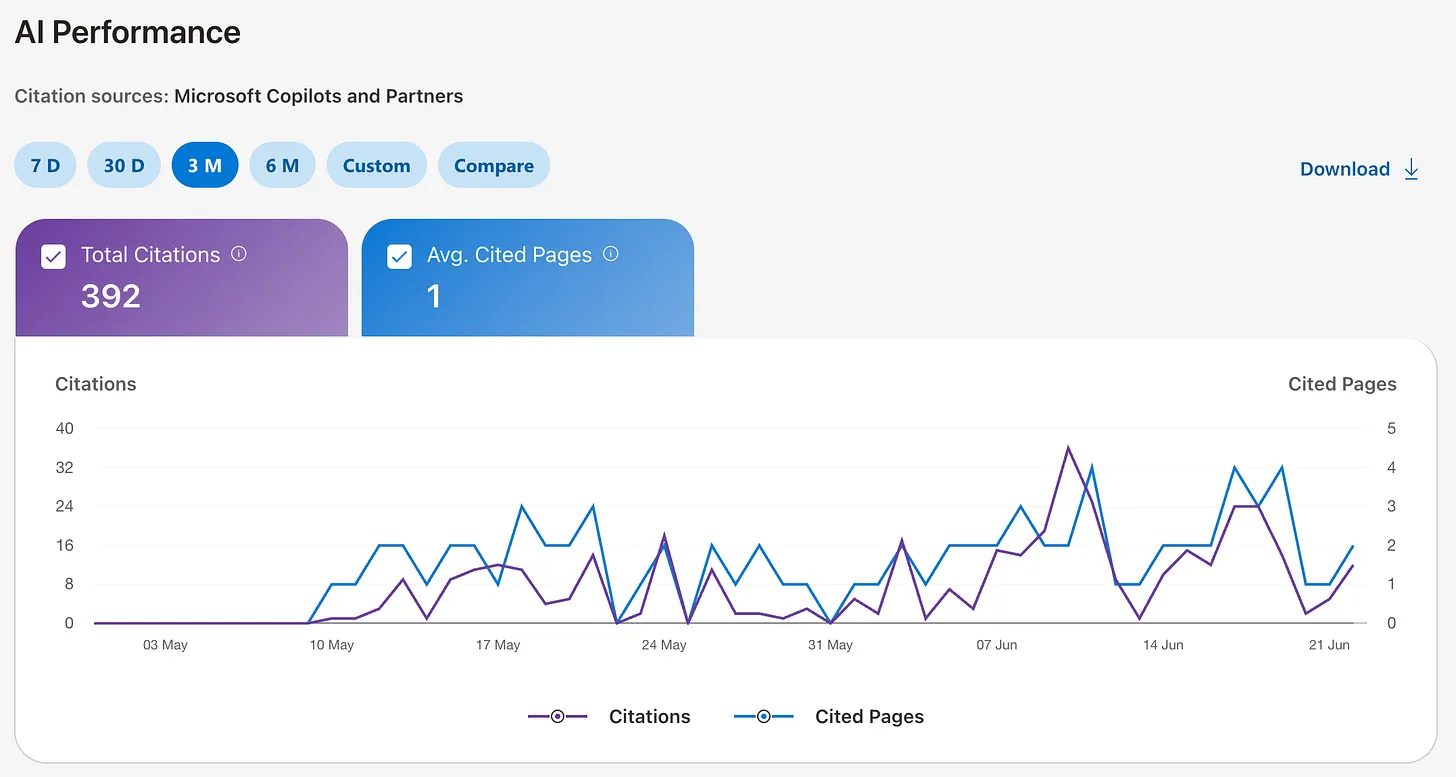
Bing Webmaster Tools - AI Performance: 392 citations from Microsoft Copilots and Partners in brisk.vision's first two months.
brisk.vision launched in April 2026. I built it with one rule: be findable by AI from day one, not as an afterthought. Two months later, Microsoft Copilots and Partners have cited it 392 times. That number only covers Microsoft's ecosystem - ChatGPT, Claude, Perplexity, and Gemini are not tracked there, so the real total is higher. I also have an older website, built the same way, past 500 citations.
I will show you exactly how I did it. The method is at the bottom. First I need to explain what is actually happening to search right now, because without that context the method will not stick. This one runs long. Grab a coffee.
What this covers
- Why your website is probably invisible to AI right now
- SEO, GEO, AEO: what each one actually means in plain English
- What is happening to Google Search in 2026
- The AI slop trap and why it always backfires
- Why the first-mover window is still open (for now)
- Exactly how I got 392 citations on a brand-new website in 2 months
- How to check your own AI citations for free, starting tonight
Why is your website invisible to AI?
You can rank #1 on Google and be completely invisible to AI. Only 12% of URLs cited by AI tools like ChatGPT and Perplexity rank in Google's top 10 (Ahrefs, August 2025). Traditional SEO does not guarantee AI visibility.
For 25 years the internet ran on one rule: write for Google's algorithm, get on the list, people click. That rule still works. It is just no longer the whole game.
AI Overviews, ChatGPT Search, Perplexity, Microsoft Copilot - these tools do not show people a list of links. They give them an answer. Synthesized. Confident. Citing three or four sources. If you are not one of those sources, you do not exist in that search.
Anyone building a professional presence online operates on reputation. Clients, employers, partners - they research you, and that research increasingly happens through AI tools, not a Google search. If AI does not know you exist, you do not exist in that search.
What are SEO, GEO, and AEO?
SEO gets you on the list. GEO and AEO get you into the answer. They are not competing strategies - they are layers you build together.
- SEO (Search Engine Optimization) has been around since the late 90s. Write content that satisfies Google's algorithm, rank higher, get clicked. You have heard of it.
- GEO (Generative Engine Optimization) is new. It means writing so that generative AI engines - ChatGPT, Perplexity, Gemini, Copilot - cite your content when they generate answers. Most non-technical professionals have never heard the term. Most never will until it is too late.
- AEO (Answer Engine Optimization) means structuring your content as direct, extractable answers: FAQ blocks, clear definitions, specific questions answered confidently. The goal is to become the source AI pulls when someone asks a question in your field.
In 2026, most websites are still only playing the first one.
What is happening to Google Search in 2026?
Google did not get replaced. It evolved in a direction that hurts unprepared creators. AI Overviews now appear at the top of most searches - a synthesized paragraph with two or three citations, not a list of links. Users read it, then they leave. They never scroll to the organic results below.
The click-through rate on traditional organic search has dropped sharply since AI Overviews became the default. People get the answer in the overview. They do not need to click. And a growing number of users skip Google entirely and go straight to Perplexity or ChatGPT.
For anyone with a website, this matters for one reason: the people deciding whether to hire you, read your content, or follow you are doing research this way. Not in a few years. Right now.
Do this tonight: open Perplexity and ask a question someone looking for you would ask. "Best change management approaches for mid-market companies." "AI tools for non-technical professionals." "Freelance brand strategy consultants." See if your content appears. Most people's will not. That is the problem. It is fixable.
Why does AI-generated content (slop) backfire?
AI slop gives you a traffic spike, then a penalty, then nothing. Original writing compounds. Here is what a lot of website owners started doing in 2024 and 2025: flood the blog with AI-generated posts, fast and cheap, fifty articles a month, and watch the traffic spike. Then watch it collapse.
Google's E-E-A-T system - Experience, Expertise, Authoritativeness, Trustworthiness - was built to detect exactly this. Google's core updates throughout 2024 and 2025 specifically targeted content farms flooding the index with thin, generated content with no human judgment behind it. The spike lasts weeks. The penalty lasts months.
There is a second problem nobody talks about: AI slop does not get cited by AI. Generative engines pull from sources they have identified as trustworthy, authoritative, and clear. Thin, repetitive, or hedged content gets skipped. The consultants flooding their blogs with generated articles are building websites that both Google and AI tools will systematically ignore.
For coaches, freelancers, consultants, solopreneurs - anyone whose name is their business - the reputational risk is separate from the SEO risk entirely. The rule I follow: AI as editor, never as author. Every word I publish, I would put my name on without hesitation.
Why is the GEO first-mover window still open?
Most non-technical professionals have never heard of GEO or AEO. The tools for measuring AI citations are still in beta. Best practices are still forming. The published research on what AI engines prioritize is 6 to 12 months old at most. This is what early SEO looked like in 1999 - chaotic, experimental, full of first-mover advantages for anyone willing to do the work.
By the time GEO and AEO become common knowledge - by the time there are courses and LinkedIn posts about "10 GEO hacks for managers" - the sites that built properly will already own the citations. Every AI tool recommending content on a topic builds a pool of trusted sources over time. Getting added early is far easier than displacing a source that has been cited thousands of times.
It will take years for AI search to find its equilibrium, which means the investment you make now compounds in ways that will be much harder to replicate in two years. This is the LinkedIn newsletter moment of 2015. The professionals who started then own that space now. The ones who waited are still trying to break through. The window is open. It will not be forever.
How did I get 392 AI citations in 2 months?
I did not build brisk.vision and then think "maybe I should optimize it for AI." I built it optimized, from the first page. Three things did the work.
A structured FAQ on the services page
brisk.vision/work-with-me has a structured FAQ covering the exact questions prospects and AI engines ask: "What does brisk. do?" "What AI tools does brisk. use?" "What industries does it work in?" Each question gets a direct, complete, confident answer. This is AEO at its most fundamental - an AI engine can extract a clean answer and cite the source without reading the surrounding context. That FAQ is responsible for a significant share of the 392 citations.
Every article gets rewritten for AI before it goes on the blog
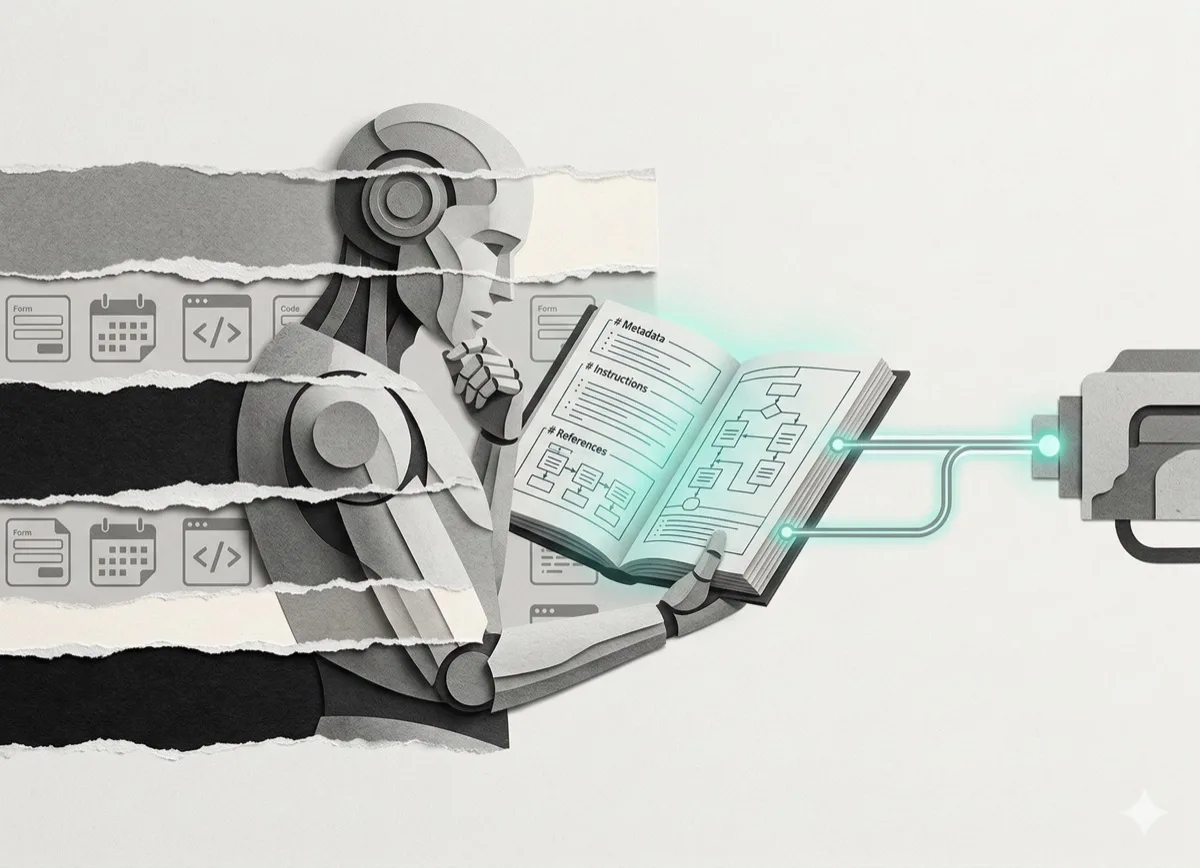
Not reformatted. Not copy-pasted with new headers. Rewritten. The original is written for humans, for the way readers follow a narrative. The blog version is optimized for how AI reads.
The key insight: 44.2% of all LLM citations come from the first 30% of an article (Growth Memo, February 2026). Bury the conclusion at the bottom and AI ignores it. Lead with the conclusion and AI cites it. So key conclusions move to the top, headers get restructured for clarity, and hedging gets removed entirely. Every article on brisk.vision opens with its most important point. I run an llm-seo-optimizer skill on every piece before it goes live - a full GEO and AEO audit that checks structure, rewrites hedged language, and surfaces the answer that should lead each section. (If you want to understand how skills like this work, I broke it down in Teach Claude once.)
I write definitively
No hedging. No "I think" or "perhaps" or "it could be argued." AI engines skip uncertain content. Every claim on brisk.vision is stated with confidence because I only publish things I have tested and know to be true.
The result after 2 months: 392 citations from Microsoft Copilots and Partners alone - one citation source, the one tracked by Bing Webmaster Tools. Perplexity, ChatGPT, and Gemini are not included, which means the actual total is higher. My older site, built the same way before I formalized the method into a skill, is past 500 citations. Same method, more time.
How do you check your own AI citations for free?
Start with Bing Webmaster Tools. It is free. Go to bing.com/webmasters, add your website, and verify ownership. Then look for the "AI Performance" tab in the left sidebar. It is in beta but it works, and it shows exactly how many times Microsoft Copilots and Partners have cited your content.
For the other major engines, a manual check is the most direct method. Open Perplexity, ChatGPT with browsing on, and Gemini. Ask a question your ideal client would ask about your field. Check whether your name, your website, or your content appears in the answer or the cited sources. Run the check with 3 to 5 different phrasings - AI tools source differently based on wording.
For ongoing monitoring without checking manually: Otterly.ai tracks AI mentions across platforms and has a free tier. LLMRefs scans multiple engines at once.
What to expect: real changes take weeks to months, not days. Most websites start at zero citations. That is a starting point, not a verdict.
Sources and further reading
- Ahrefs, "AI citation vs. Google ranking overlap" (August 2025) - the 12% figure
- Growth Memo, "How LLMs Cite Content" (February 2026) - the 44.2% / first-30% finding
- Google Search Central - E-E-A-T and helpful content guidance
- Bing Webmaster Tools - AI Performance report (beta)
- Teach Claude once - how the skills behind this method work
- How 8 AI agents write my Substack notes - another build-in-public system
brisk.vision launched in April. By June it had 392 AI citations. I built it to be found - not just by Google, but by whatever comes after Google. AI is already recommending people in your field. Every day you operate without an optimized presence is a day a competitor shows up in that recommendation instead of you.
Start with Bing Webmaster Tools tonight and check if you are visible. If you want the llm-seo-optimizer skill that runs the audit, subscribe to the brisk. newsletter and reply - I will share it with you directly.
If you found this useful, I send one like it every week.
Subscribe free → - Lucija Tomšić · brisk.vision