"Prompt engineering" is a phrase people sell courses on. It is not a skill you are missing. You write clear instructions every day, you just call them emails.
A good prompt is just a clear brief. If you can brief a freelancer, you can prompt Claude or ChatGPT tonight. That is the core method I teach inside brisk.: translate what you want into a clear job, not a vague topic.
I have spent 13 years translating what developers say into something a board can act on. I do not code, and never have. Everything below is the thing I actually do, not theory.
Why Do AI Answers Come Out Generic?
AI answers come out bland because you gave the tool a topic, not a job. "Write about marketing" has no reader, no goal, no length, and no voice, so the model fills the gap with the most average version of "marketing" it has ever seen.
Compare that to a real job: "Write a 3-line follow-up email to a client who went quiet after our proposal, warm but not needy." Now there is a reader, a situation, a tone, and a length. The bland disappears because the blank space is gone.
You would never hand a task to a competent colleague by saying only "marketing" and then judge them for guessing. You would tell them who it is for, what you need, and by when. Vague in, average out - the model is not being lazy, it is filling the gaps you left with the most common answer it has.
Type "write about time management" into Claude and read the beige result. Then type "write a 4-line Slack message telling my team we are moving the Tuesday standup to Thursday, casual, no apology." Same tool, same model, a completely different answer.
What Is the Role, Task, Context, Format Prompt Formula?
Every prompt that works fits one four-part shape: Role, Task, Context, Format. It is the same structure you would use to brief a competent human, and once you see it, you notice it everywhere.
- Role - who the AI should act as. "You are an experienced management consultant" sets the vocabulary and the judgment it pulls from.
- Task - the one job. "Rewrite the email below" beats "help me with my emails."
- Context - what it needs to know to not sound like a stranger: who the client is, what went wrong, what to avoid.
- Format - what the answer should look like when it lands: length, structure, tone, draft or ready-to-send.
Copy-paste brief:
You are an experienced management consultant.
Task: rewrite the email below so it sounds warm but direct.
Context: the client missed our last two calls and I do not want
to sound annoyed.
Format: under 120 words, no jargon, ready to send.
[paste your email]
Nothing in there is clever. No secret token, no "act as a world-class expert." Four plain lines: who to be, what to do, what it is walking into, what "done" looks like. The same shape works for a wall of workshop notes and forty minutes before a client call:
You are a sharp executive assistant.
Task: turn the messy notes below into a clean agenda.
Context: this is for a 30-minute call with a nervous first-time
client who wants reassurance we have a plan.
Format: 5 agenda items max, one line each, plus one sentence I
can open the call with.
[paste your notes]
You will not use all four parts every time. A quick question needs none of it. But the moment an answer disappoints you, the missing part is almost always one of these four, and you can usually feel which one.
What Is the Fastest Way to Get AI to Match Your Tone?
Paste one thing you like and say "match this." That single move beats every tone-description trick a course will sell you.
Tone is nearly impossible to describe and instant to demonstrate, so stop describing it. Show it instead:
Here is a paragraph I wrote. Write the next three in the exact
same voice, rhythm, and sentence length:
[paste your paragraph]
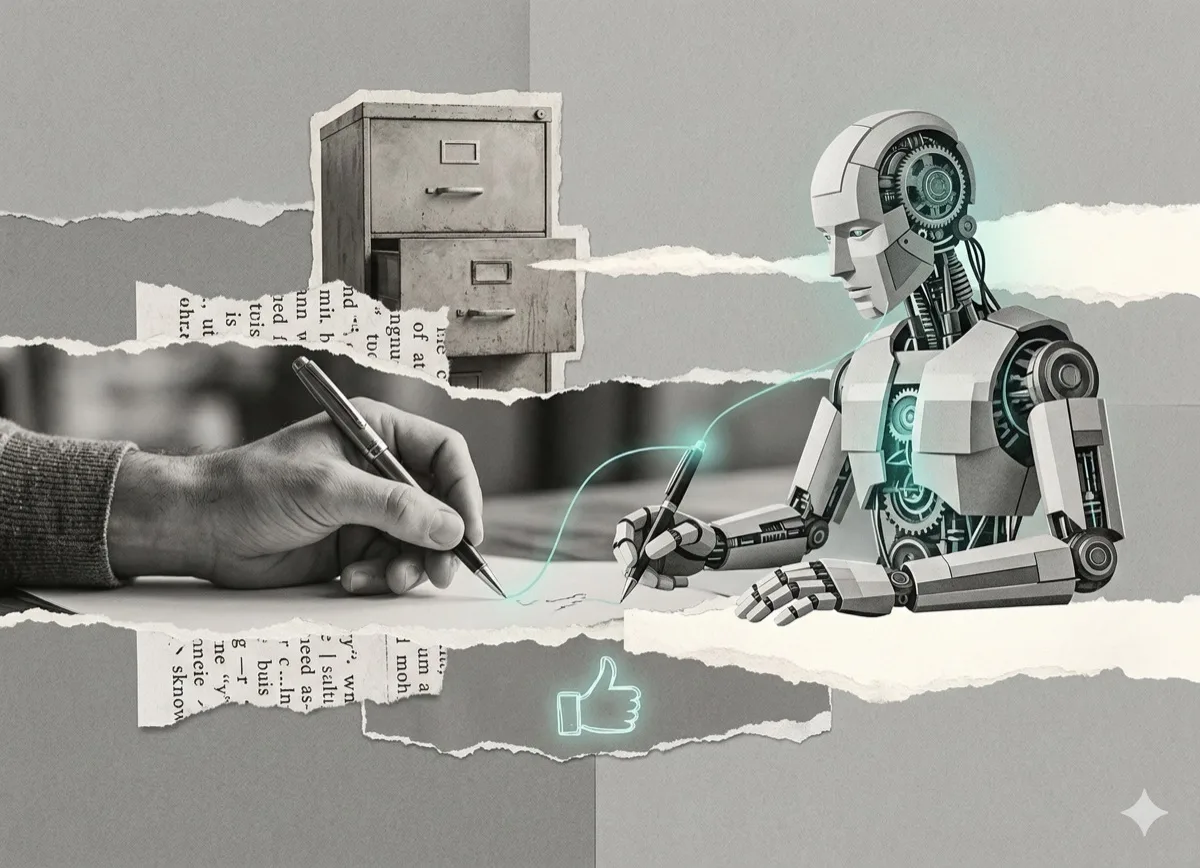
The AI now has your voice, structure, and length copied for free. This works for anything with a shape: paste an email you liked and say "reply to this new message in that style," or paste a good LinkedIn post and say "same structure, my topic." I cover the deeper version of this move, training Claude on a full body of your writing, in How to Train Claude to Write Like You.
Tone is almost impossible to describe and instant to show. When words fail, paste an example and say "match this."
How Do You Fix a Bad AI Answer Without Starting Over?
You correct it, you do not re-prompt it. The first answer is a draft, not a verdict, and most people quit at exactly this moment.
Non-technical professionals get a mediocre answer, sigh, delete everything, and rewrite the whole prompt from scratch, treating the AI like a vending machine that either gives you the snack or does not. It is a conversation, not a machine.
The corrections are short and blunt, exactly like editing a junior colleague:
- "Shorter. Half the length."
- "Less formal, drop the corporate tone."
- "You invented a statistic. Remove it, do not replace it."
- "Keep the second paragraph, rewrite the rest."
- "Now make it sound like the example I pasted earlier."
Change one thing at a time. Rewrite the tone, length, and structure all in one go and you will not know which change fixed it and which broke it. One correction, read the result, next correction. The people who get great results from AI are not writing better first prompts, they are having a second and third exchange while everyone else deletes and restarts.
What Are the 3 Prompts Worth Saving in a Note?
You need three prompts, not a library of 400. Save these in a note on your phone, ready to paste.
A. The rewrite prompt, for every email or paragraph that came out clumsy:
Rewrite the text below so it is clear and [warm / direct / formal].
Keep my meaning, cut anything that does not earn its place.
Under [X] words.
[paste your text]
B. The summarize prompt, for the long document or thread you do not have time to read fully:
Summarize the text below in 5 bullets, then tell me the one thing
I should not miss. Plain English, no jargon.
[paste your text]
C. The "match this voice" prompt, the single highest-value move in this guide:
Here is something I wrote. Write [what you need] in the exact
same voice and rhythm:
[paste your example]
The takeaway: a good prompt is a clear brief. If you can brief a freelancer, you can prompt AI. Everything else is decoration.
What Matters More Than Prompting Once AI Output Gets Cheap?
Taste, voice, and relationships, because getting a decent draft out of AI is on its way to free, and the 4-part shape above will not stay a secret.
When output gets cheap, output stops being what sets you apart. A competent email, a passable summary, a fine first draft: the machine now hands those to everyone. So the value moves to what a model cannot average into sameness.
- Taste. Knowing which of ten answers is actually good, and why. The prompt gives you options, your judgment picks the right one.
- Voice. Sounding like you, not the beige middle of everything the model has read. This is why "match this voice" is the highest-value move in this guide.
- Relationships. The people who open your email because it is from you. No prompt buys that, you earn it over years.
I sold a prompting e-book on Etsy in January 2023, made in Canva. It sold two copies for about fourteen euros. I was early to a market that did not exist yet, but the one thing I got right back then still holds: clarity beats cleverness, and taste beats both. That is the whole method behind brisk., translate, do not decorate.
Sources and further reading
- How to Train Claude to Write Like You - the deeper version of the "match this voice" move
- Agent Skills - what to do once a prompt turns into something you reuse every week
Open Claude, paste one email from today, give it the 4-part shape, then make it sound like you. That is ten minutes of setup for the part of your work that compounds forever.
If you found this useful, I send one like it every week.
Subscribe free → - Lucija Tomšić · brisk.vision